

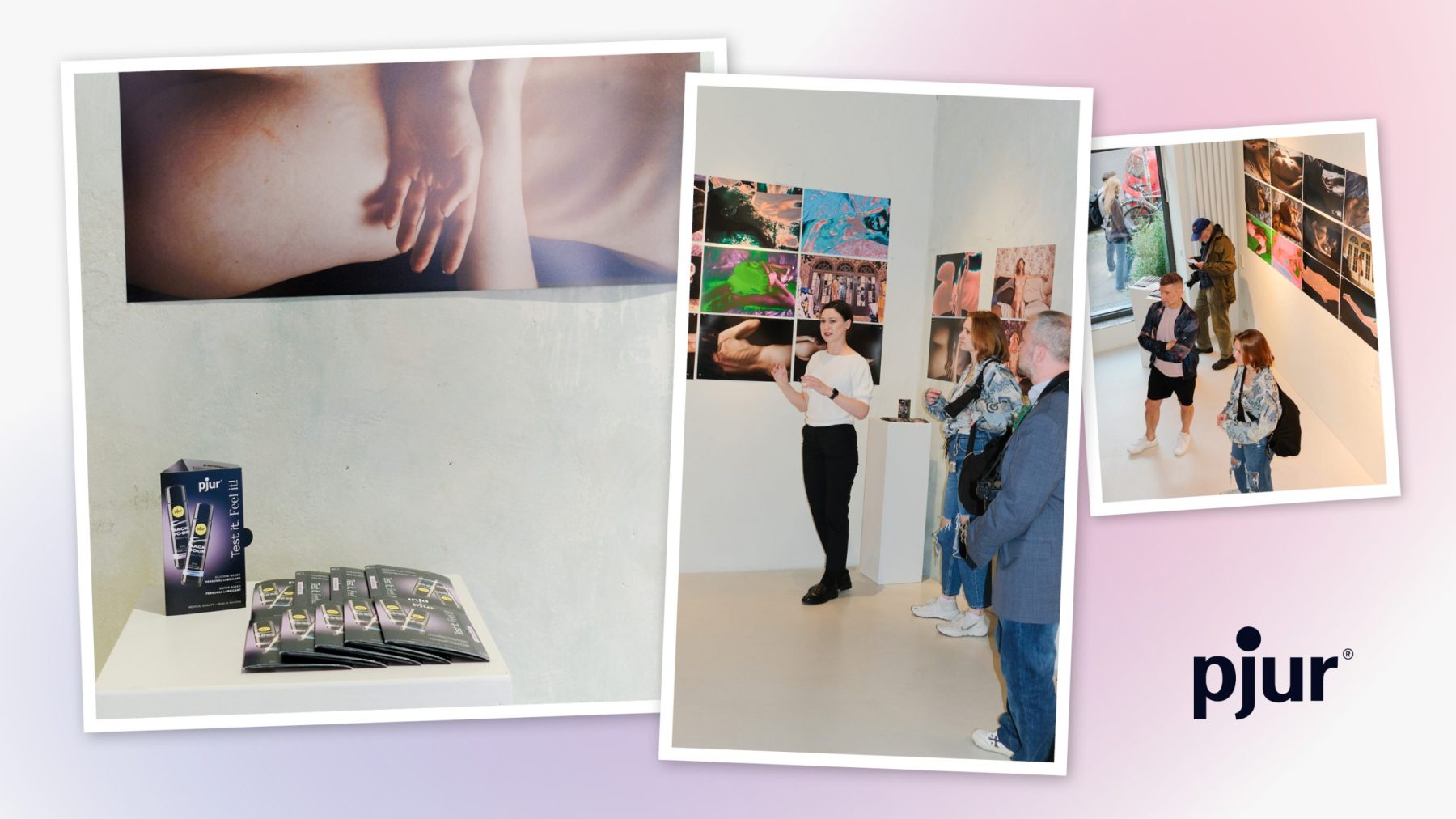
With its opening on June 11, 2026, the exhibition NAGOTA by artist Adam Ripley began its run in Berlin, where it remained on display until June 18. As an official partner, pjur supports the art project and accompanied the opening of an exhibition that explores themes of physicality, naturalness and the connection between humans and their environment.
Curated by Anna Galeeva, the exhibition brings together photographic works created by Adam Ripley over the course of approximately two decades. At its core is the human body as a natural part of its surroundings. The works invite visitors to view themes such as identity, vulnerability, beauty and perception from new perspectives.
Partnership based on shared values
For pjur, the collaboration provided an opportunity to support a project that places self -determination and a respectful approach to the human body at its centre. These are themes that have also played an important role for the
brand for many years. The opening brought together guests from the fields of art, culture and media, creating space for discussions about the exhibition itself as well as broader societal perspectives on physicality and intimacy.
An art project between nature, the human body and perception
The title NAGOTA is derived from the Proto -Slavic word “nagŭ” and refers to the uncovered state of the human body. The exhibition does not view nudity as provocation, but rather as an expression of openness and connection. In addition to the photographic works of Adam Ripley, the project also features artistic contributions by Kristina Tarasova and Daniel
Mais. Together, the works create a multi -layered dialogue about the human body and its relationship with the natural world.
Commitment to open dialogue
By supporting NAGOTA, pjur continues its commitment to projects that encourage an open and respectful dialogue about intimacy and personal freedom. The partnership further underlines the brand’s aspiration to support cultural and social initiatives that open new perspectives and challenge established ways of thinking.